
Beyond Rules and Fiction: Why Uncertainty Matters
Engagement is born from deciphering patterns

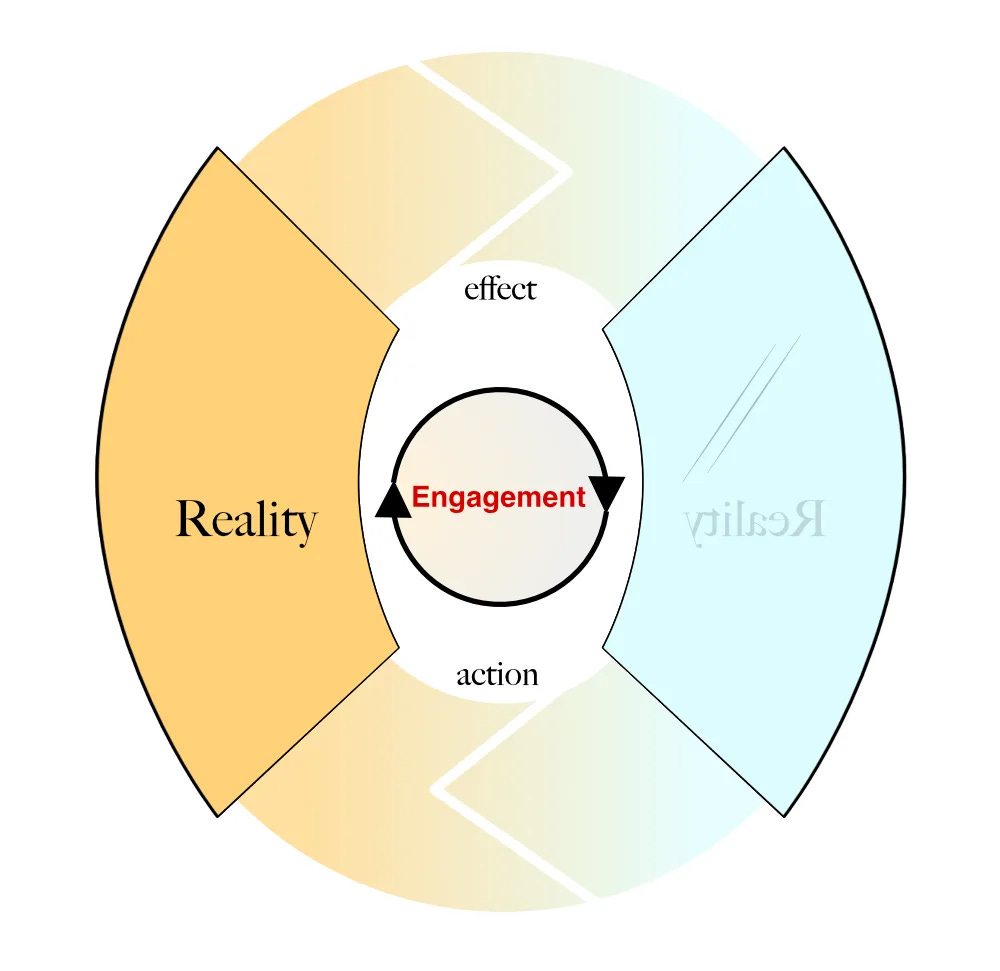
We can create engagement by continuously updating our mental model—the loop where we react or take action based on information we received from the game space during the session, combined with the expectations and foundational information established before the session. That very loop, every time we need to update one of our mental models, dramatically increases our engagement over time.
I have written games that can create deep engagement within an hour, and there are games and game masters that can achieve the very same thing in five minutes. By creating the loop, you create “fun”. Your particular kind of fun, depending on the type of game structure required to activate it.However, there is something I have mentioned in the examples from all previous articles, and I covered this in an article outside this series regarding uncertainty in games. Uncertainties like the players themselves, several storylines with clues mixed up, the game master as an untrustworthy narrator, fragmented descriptions, etc.
We need uncertainty because we are pattern-recognizing creatures. Our interest is triggered by figuring out patterns. Once we have discovered the pattern, the activity becomes boring, and we need another pattern to interpret.
We need something that tickles us - a pattern to discover. In media res works because it adds uncertainty. We don't know why something is happening because we're dropped into that situation. Whenever I describe a situation, I usually don't describe where they are until the very end. "A roar. Wings flaps. The heat of fire. You're laying on the ground and the dragon right above you.". The players can't act until they don't know where they are, so the uncertainty lies in trying to puzzle the pieces together. To see the relevance of what's being described for them.
As already mentioned, new information can make an activity engaging—for example, when you need to evaluate its relevance in relation to everything else that has already been established. The information may come up as a surprise; its novelty can break your preconception; it may increase the complexity of every factor you need to consider.
Roleplaying games already contain an inherent complexity in the fact that what you imagine does not necessarily match what the other players imagine. Every person reading this paragraph will have a different image in their mind than the one you have.
“ Arc lights and soot. Shadows stretch and shift in the darkness. A swift wind seeks the attention of what is to come. You're on the hunt. A human neck is your target. “
This creates a foundation for creative misunderstandings, where we constantly have to adapt to the actions of others based on their unique interpretations: the unique models they have constructed in their minds, and which parts of those models they consider most important.
Are they doing something to make the group have fun? Are they doing something to strengthen the theme of the game? Are they experimenting to understand how the game or the group functions?
This also leads me to the next point. Beyond the loop and the uncertainty factor, there is a third element that influences play: the player’s own personal motivation.
Play style, identification, and expectations about the game all influence how the player interprets information coming from the game’s reality.
In this series:
Beyond Rules and Fiction: What Makes Games Different From Stories
Beyond Rules and Fiction: Why Uncertainty Matters
Beyond Rules and Fiction: A Diagnostic Tool for Debugging Engagement
Beyond Rules and Fiction: The Future of Roleplaying Game Design